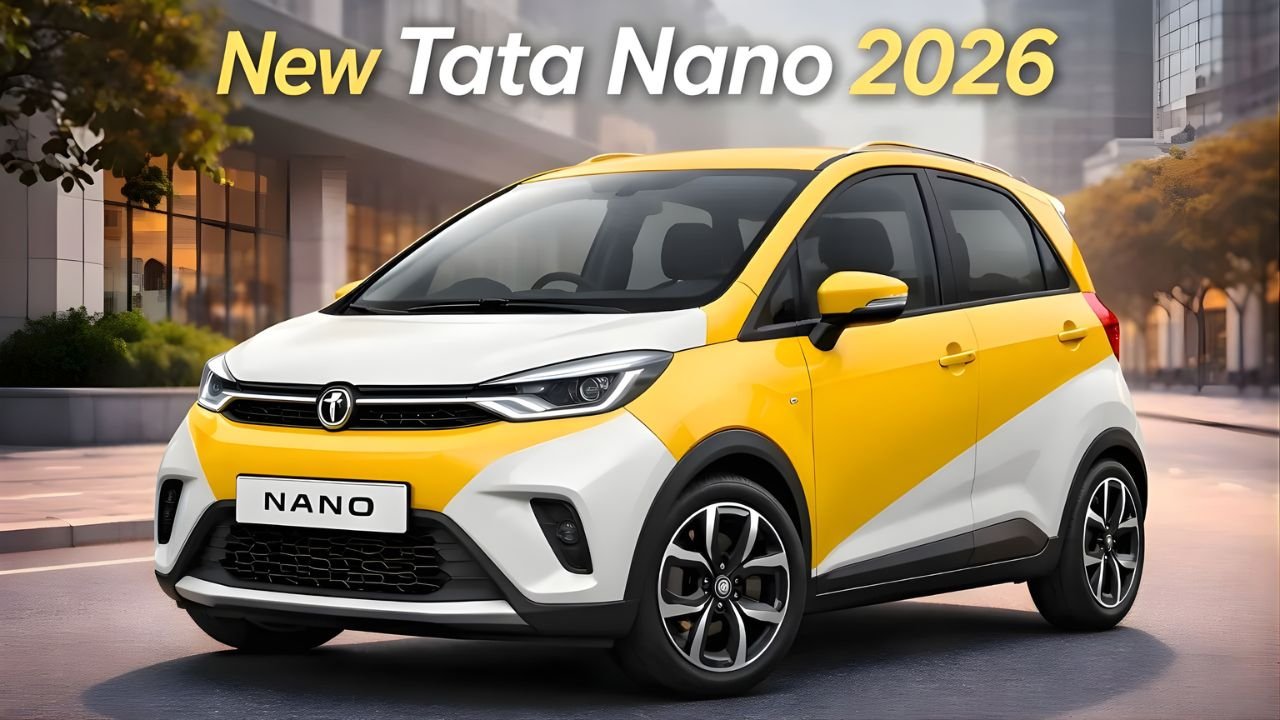
The 2026 Tata Nano EV is one of the most talked-about upcoming affordable electric cars in India. Built by Tata Motors, the Nano EV aims to bring electric mobility to budget-conscious buyers while maintaining the compact practicality that made the original Nano famous. The new version is expected to combine modern electric technology with a city-friendly design and low running costs.
India’s EV market is growing rapidly, and manufacturers are focusing on affordable electric vehicles to attract new buyers. The Nano EV could play a significant role in this shift by offering a compact electric car with decent range, fast charging capability, and modern features at a competitive price point.
Compact and Modern Exterior Design
The 2026 Nano EV retains the small and practical silhouette of the original Nano but introduces several modern styling upgrades. The front section is expected to feature sleek LED headlamps, a closed EV-style grille, and aerodynamic bumper design that improves efficiency. These changes give the car a more futuristic and premium appearance.
Its compact size remains one of the biggest advantages. With a length of around 3 meters and a narrow body, the Nano EV is ideal for crowded city streets and tight parking spaces. Despite its small footprint, the car can comfortably seat four passengers, making it practical for daily urban use.

Interior and Technology Features
Inside the cabin, the Nano EV is expected to offer a simple yet modern interior layout. The dashboard may include a digital instrument cluster and a touchscreen infotainment system that supports smartphone connectivity and navigation features. These upgrades make the cabin feel more contemporary compared to the older petrol Nano.
Other expected features include power steering, mobile charging ports, and connected car technology that allows owners to monitor battery status and vehicle information through a smartphone application. Such features aim to make the Nano EV appealing to young urban buyers.
Battery, Motor and Performance
The Tata Nano EV is expected to use a lithium-ion battery pack paired with an efficient electric motor. Depending on the variant, the motor may produce around 15–20 PS of power with instant torque that provides smooth acceleration in city traffic.
The car is designed primarily for urban mobility, so its top speed is expected to range between 70 km/h and 90 km/h depending on the configuration. This performance is sufficient for daily commuting while keeping energy consumption low.

Real-World Driving Range
Many rumors claim extremely high ranges for the Nano EV, but realistic estimates suggest a practical range of 150–220 km per charge depending on battery size and driving conditions. This range is suitable for city driving where most daily travel is under 80 km.
Some reports mention higher figures between 250 km and 300 km, but such numbers depend heavily on battery capacity and testing conditions. Real-world driving range is likely to vary based on traffic, driving style, and climate conditions.
Fast Charging and Charging Time
Charging is an important aspect of any electric vehicle, and the Nano EV is expected to support both home charging and DC fast charging. With a standard home charger, a full charge may take approximately 6–8 hours, making overnight charging convenient for most owners.
Fast charging support could allow the battery to reach around 80% charge in 45–60 minutes, which significantly reduces waiting time during longer trips. This capability makes the Nano EV more practical for urban drivers.

Safety Features
Safety is expected to improve significantly compared to the original Nano. The electric version may include dual airbags, ABS with electronic brakeforce distribution, rear parking sensors, and seatbelt reminders for passengers. These upgrades help the vehicle meet modern safety expectations.
The strengthened body structure and additional safety systems aim to provide better protection for passengers while maintaining the lightweight construction needed for efficiency.
Expected Price in India
Affordability remains the biggest attraction of the Nano EV. Reports suggest the price could start anywhere between ₹2.5 lakh and ₹6 lakh (ex-showroom) depending on battery capacity and features.
This pricing would make it one of the most affordable electric cars in India. It may compete with small urban EVs like the MG Comet EV and entry-level electric hatchbacks in the growing budget EV segment.

Full Review: Is Nano EV Worth It?
The Tata Nano EV has the potential to become a game-changer in India’s entry-level EV market. Its compact design, practical driving range, and low expected price could make electric cars accessible to a much wider audience. For city commuters who want an affordable electric vehicle with minimal running costs, the Nano EV could be a very attractive option.
However, some of the higher range claims circulating online appear unrealistic for such a small and low-cost car, so real-world performance will only be clear after official specifications are released. Still, if Tata Motors manages to balance price, range, and features effectively, the Nano EV could revive the “people’s car” concept for the electric era.